HeartMedi+
Software for functional assessment of coronary artery stenosis using CT images
HeartMedi+ Indication of Use
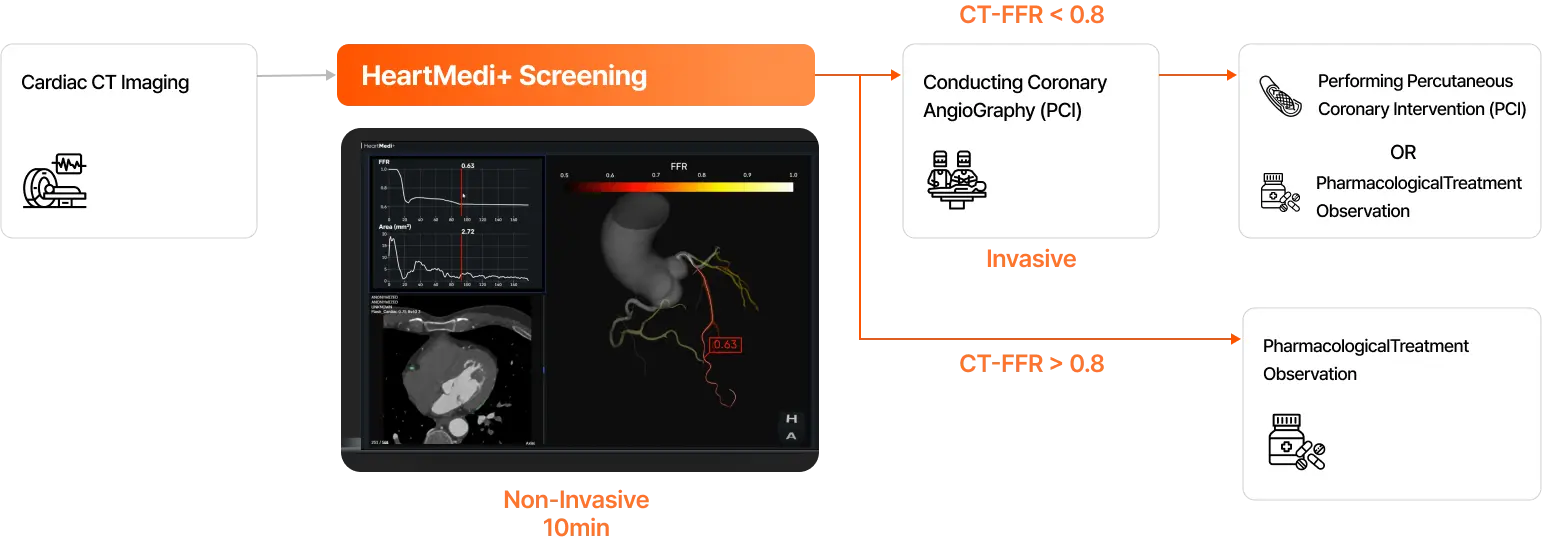
HeartMedi+ Screening
Non-Invasive 10min
CT-FFR < 0.8
CT-FFR > 0.8
Conducting Coronary Angiography (CAG)
InvasivePharmacological Treatment or Observation
Performing Percutaneous Coronary Intervention (PCI)
Pharmacological Treatment or Observation
Fast Results (within 10 minutes)
Pre-procedural screening (saving time and cost)
Key Features of HeartMedi+
01
PACS Interfacing and Data Access
02
Review CT Images and Verify or Modify 3D Models as Needed
03
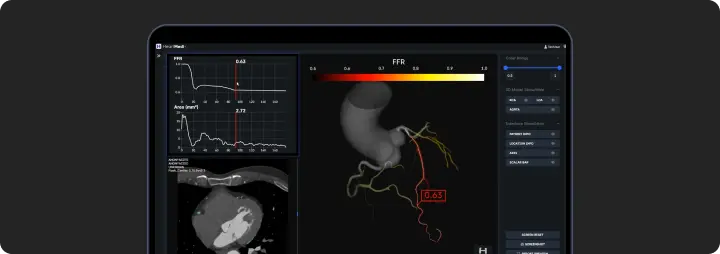
Verify CT-FFR and Assess Coronary Artery Status
04
Capture Coronary Images and Store in PACS
05
Provide and Customize CT-FFR Result Reports
01
PACS Interfacing and Data Access
02
Review CT Images and Verify or Modify 3D Models as Needed
03
Verify CT-FFR and Assess Coronary Artery Status
04
Capture Coronary Images and Store in PACS
05
Provide and Customize CT-FFR Result Reports
HeartMedi+Technology
Enhanced Accuracy and Simplified Process with AIMEDIC’s AI-Based Segmentation

Physiological Data
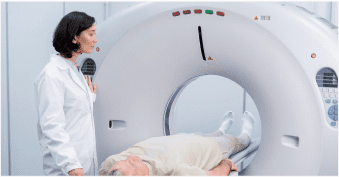
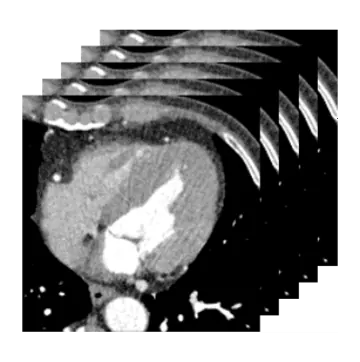
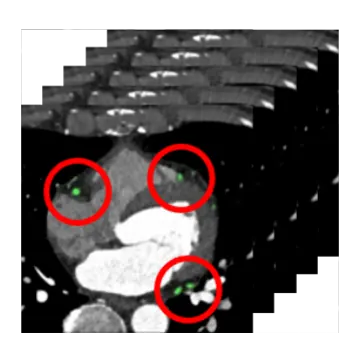
Cardiac CT scan
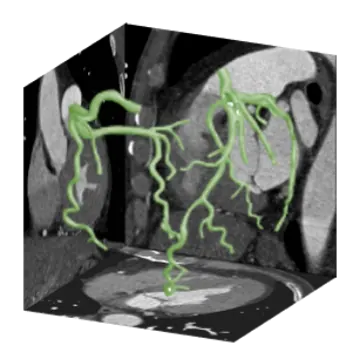
AI-Based Fully Automated 3D Coronary Artery Segmentation
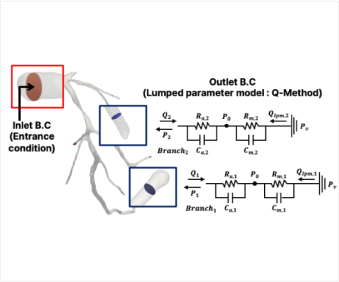
LPM + CFD Modeling
Boundary condition & Parameters settings
Coronary hemodynamics simulation combining CFD and LPM technologies
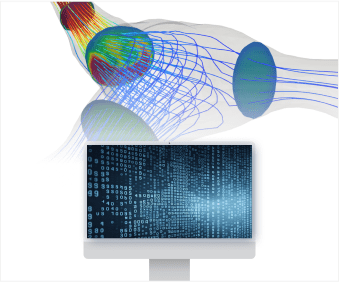
Computer Simulation
Coronary artery hemodynamic simulation
Coronary hemodynamics simulation based on on-site technology
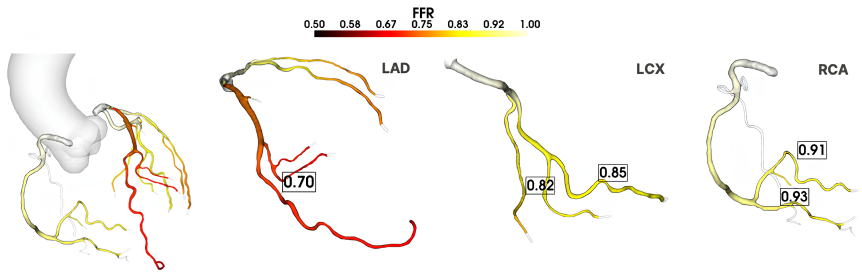
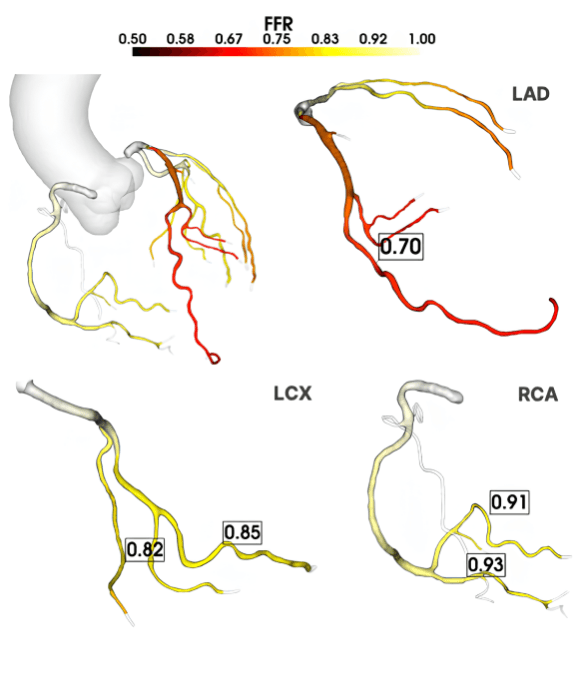
CT-FFR Coronary Artery Analysis Report
Analysis of coronary artery CT-FFR

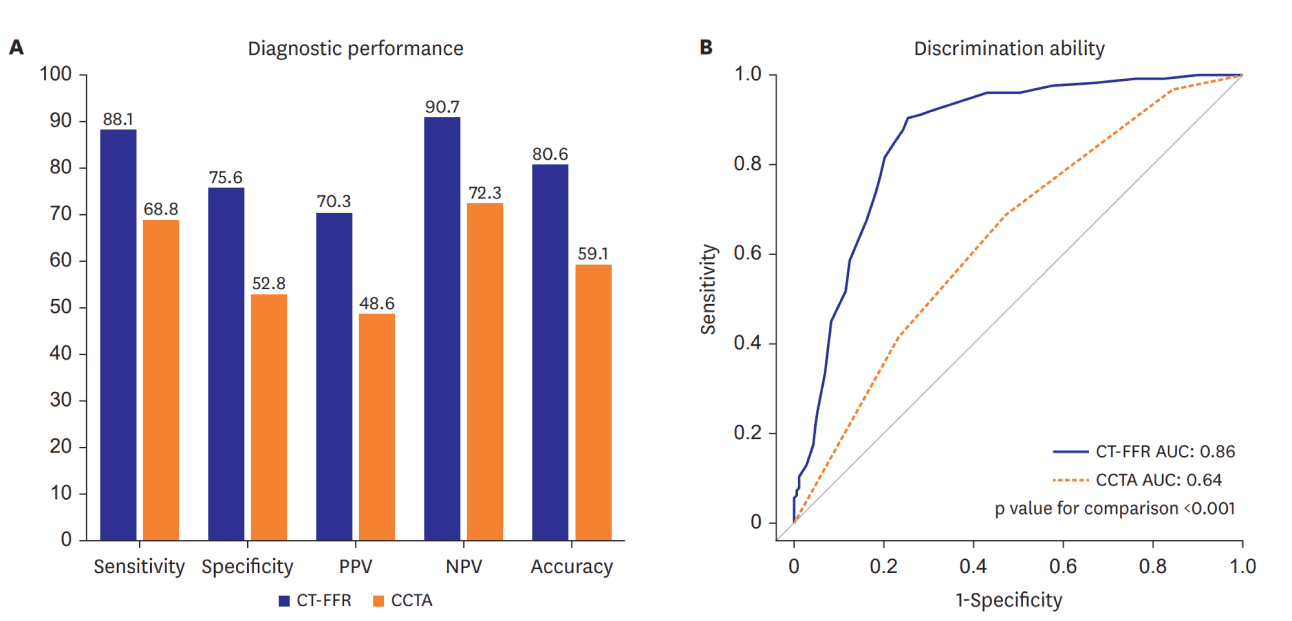
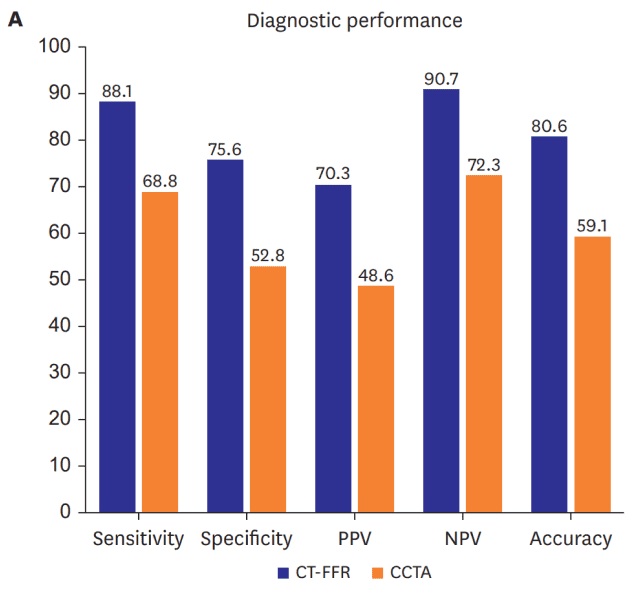
Accuracy
80.6%

Clinical Studies with CCTA
20% Superiority

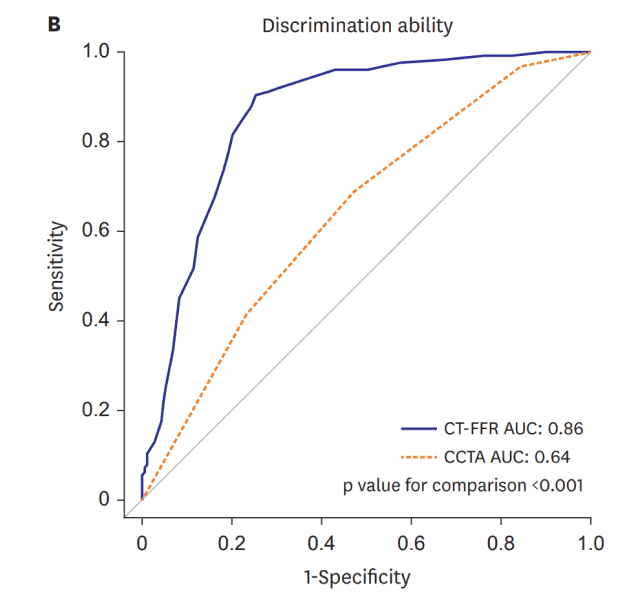
AUC
0.862
Rank
Sensitivity(%)
Specificity
Diagnostic Accuracy(%)
Area Under Curve
CT-FFR(HeartMedi+)
88.1 (82.4-93.7)
75.6 (69.6-81.7)
80.6 (80.5-80.7)
0.86 (0.82-0.90)
CCTA
68.8 (60.7-76.9)
52.8 (45.8-59.9)
59.1 (59.0-59.3)
0.64 (0.58-0.70)
Rank
CT-FFR(HeartMedi)
CCTA
Sensitivity(%)
88.1 (82.4-93.7)
68.8 (60.7-76.9)
Specificity
75.6 (69.6-81.7)
52.8 (45.8-59.9)
Diagnostic Accuracy(%)
80.6 (80.5-80.7)
59.1 (59.0-59.3)
Area Under Curve
0.86 (0.82-0.90)
0.64 (0.58-0.70)
View Results
Read Full paper
HeartMedi+ Product Information
Core information for non-invasive CT-FFR analysis
HeartMedi+ uses coronary CT imaging and computational simulation to support cardiovascular assessment with hemodynamic analysis information.
Clinical Need
Anatomical stenosis and functional significance must be reviewed together
Coronary CT can show vessel structure and narrowing, while functional impact may require additional interpretation in the clinical workflow.
Intended Audience
Healthcare professionals reviewing cardiovascular imaging
The analysis should be considered together with symptoms, history, and other test results by qualified healthcare professionals.
Input Data
Coronary CT angiography image data
Image protocol, motion, contrast timing, and vessel boundary quality can affect the reliability of analysis outputs.
Output
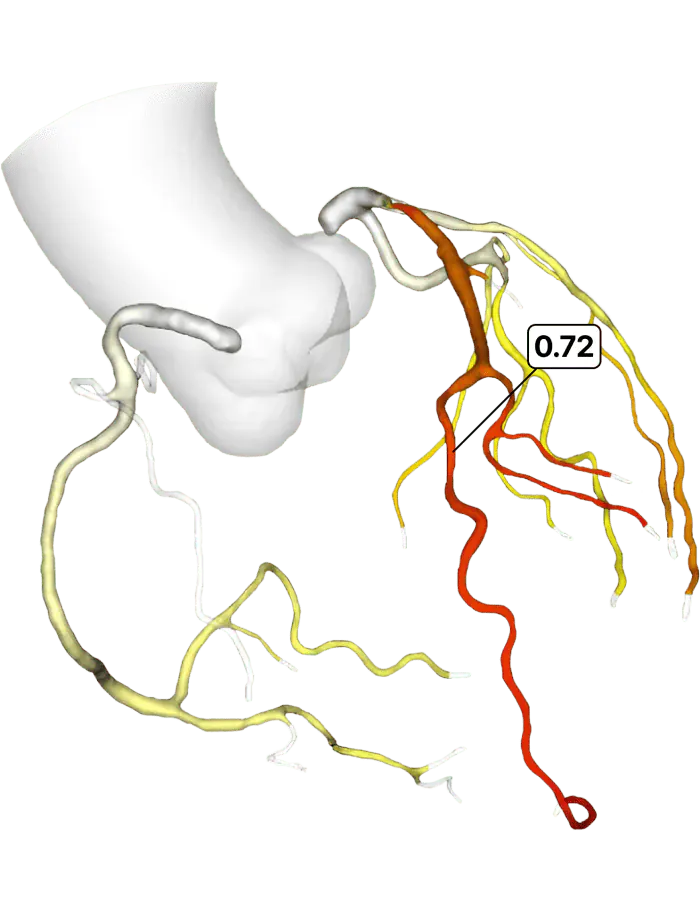
FFR distribution prediction and hemodynamic interpretation support
Product result images should be read alongside official documentation, use context, and limitations for the target market.
Evidence and Verification Points
Research output, innovative medical technology information, and inquiry paths are linked so users can verify product context and supporting material.
Common Questions
Which search intents does this page serve?
It addresses CT-FFR, non-invasive coronary functional assessment, cardiovascular medical AI, and hospital adoption research intents.
Does the output determine diagnosis by itself?
No. The output supports clinical review, and final diagnosis or treatment decisions remain with qualified healthcare professionals.
What evidence should be reviewed together?
Publications, product documentation, regulatory or program information, and implementation context should be reviewed together.
Content update: 2026-07-20. This page separates capabilities, use context, evidence links, and limitations to keep medical claims restrained and verifiable.
Request a Demo for Free
Demo